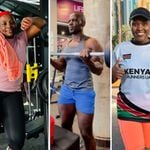
January always arrives loudly. After December feasts and late-night parties, many people return to the gym intent on undoing the weight gain with sweat and renewed seriousness. For others, getting fit becomes a New Year’s resolution.
Gyms are often packed, with cardio classes spilling over and people queuing for treadmills and dumbbell racks. But there is a less crowded corner of the gym—and a type of weight many people ignore: the kettlebell. It is a round weight with a solid handle that looks a lot like a kettle.
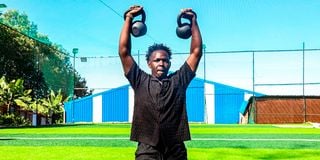
While others scramble for space in cardio classes or fight over barbells and squat racks this January, a kettlebell may be all you need to kick-start your fitness goals.
It may not be the most sought-after piece of equipment, but kettlebell training is versatile and easy to access, even at home, offering a full-body workout.
Fitness instructors say kettlebells are highly effective for building full-body strength and shedding excess weight. With a single kettlebell, you can perform exercises that target the legs, arms, core, back, chest and shoulders.
They are also highly portable, meaning you do not have to go to the gym. You can use them at home as long as you have some space—whether in a bedroom, on a balcony or on a patio.
“Because people have to go to the gym, queue for machines and weights, then travel back home, most end up spending close to two hours a day at the gym. In January, when gyms are at their most crowded, that can easily translate to 10 wasted hours a week. Kettlebells allow you to get a very effective workout in just 10 to 25 minutes without the commute or the queues,” says Mark Singira, a certified fitness instructor.
For Singira, kettlebell training mirrors real-world movement.
“Everything you do in the gym or in athletic programmes like martial arts or even circus performance comes down to basics like deadlifts, squats, and clean and press movements. Kettlebells cover all of that.”
His go-to kettlebell exercises are the swing, clean and press, and squats.
“These are compound movements that work your entire body. They are also easy to learn, even at home, which makes kettlebells a great entry point for beginners if you ask me.”
The most underrated weight
Willy Juma, a CrossFit trainer, calls kettlebells the most underrated category of weights, arguing that they can be more effective than dumbbells.
“They are simple to grasp, and that simplicity is what makes them powerful. You can train your entire body from anywhere, yet people ignore them. Go to any gym at peak hours, and you will see everyone scrambling for machines and barbells, while the kettlebells lie around untouched.”
As a CrossFit trainer, Juma prioritises functional movement, which he says is where kettlebells excel.
“For me, kettlebells are the ultimate ‘why not both?’ You can use them for intense HIIT [high-intensity interval training] sessions, build functional strength like traditional weights, and improve mobility and coordination using one piece of equipment.”
While he acknowledges that kettlebells are not ideal for pure muscle building, Juma believes mobility and functionality deserve more focus.
“You can build muscle with heavy weights, but if your joints are stiff, how effective will that muscle be as far as your daily body movement is concerned? In real life, our bodies do not work in isolated muscle groups. Our body moves as one unit, and kettlebells train you for exactly that.”
Like Singira, he says kettlebells are ideal for beginners.
“Someone new to the gym can feel overwhelmed by the machines. Kettlebells get you moving immediately as you settle into a routine, and better yet, you don’t even need to be at the gym. It could be in your kitchen or sitting room.”
Christian Wandera, a fitness instructor based in Kiambu, agrees.
“We are living in an era where not everyone wants to build big muscles, but everyone wants to stay fit,” he says.
There are numerous exercises that can be done with kettlebells, including squats, walking lunges, deadlifts and the farmer’s walk, where you walk while holding the weights.
Wandera recommends a few foundational kettlebell exercises that deliver maximum results. He advises choosing a weight that feels challenging and performing 15 to 20 repetitions, repeated three to four times.
Alpha fitness gym instructor Chris Wandera works out with a kettlebell on January 3, 2026.
1. Kettlebell swings
“There are hundreds of kettlebell exercises, but the swing is core. Few movements load the hips and the eccentric phase as powerfully as the swing.”
Unlike explosive barbell lifts that take time to master, the swing is easy to learn and allows for high output with repeated reps. The acceleration of the bell creates a load that feels heavier than it is, engaging the arms, legs, core and back at once.
“You are not just building strength. You are building endurance and improving your posterior. The entire body is involved.”
2. Kettlebell clean and press
This combination of two fundamental movements builds both lower- and upper-body strength.
Wandera prefers it to traditional barbell deadlifts, which can strain the lower back if poorly executed.
“The clean and press is extremely time-efficient and functional. It employs most of the muscles and joints in the body in one flow.”
Using a single kettlebell also improves balance, posture and coordination.
“The clean improves unilateral strength, mobility, and hip power. When you press, your shoulders and rotator cuff are forced to stabilise the ball. Any imbalance immediately shows up, which improves alignment and control,” he explains.
3. Kettlebell rows
Rows are a fundamental pulling exercise that strengthens the back, shoulders and biceps.
“Kettlebell rows help improve posture and build functional upper-body strength. They engage the core and forearms, balance pushing movements, and enhance overall stability for other lifts, which could be the heavy lifts.”