Why men over 40 need Pilates exercises more than ever

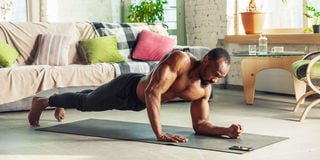
Pilates is a full-body workout that builds strength, improves posture, protects joints, and sharpens core stability.

Photo credit: Shutterstock

In the last few years, Pilates has quietly stretched its way into Kenya’s fitness scene, with sleek studios popping up across Nairobi.

Step into any of these spaces and one thing quickly stands out: most of the mats, the reformer, and the Wunda chair are occupied by women.

A BDLife tour of several Pilates studios around the city confirmed this trend, but it also uncovered a lingering misconception.

To many Kenyan men, Pilate exercises, which are low-impact movements that emphasise core strength, flexibility and body alignment, are is still dismissed as a women’s workout.

Men ignore them, thinking they are too light, too gentle, not manly enough or simply not serious enough.

However, fitness experts insist this narrative could not be more off balance.

Pilates, they say, is a full-body workout that builds strength, improves posture, protects joints, and sharpens core stability.

In fact, experts argue that Pilates may be one of the best workouts men can embrace, especially those in their 40s and beyond who want to stay active without waging war on their knees and back.

“Many men shy away from Pilates, and what I find both funny and interesting is that when you look at its history, Pilates was actually designed by a man, for men. Joseph Pilates designed the exercises to rehabilitate injured soldiers during World War I. These were men recovering from different war injuries,” says Jacqui Wangari, a certified Pilates instructor and founder of Zuberi Pilates.

Pilates

Jacqui Wangari does Pilates workout exercise at Zuberi Pilates Studio in Nyari Estate, Nairobi on August 12, 2025.

Photo credit: Boniface Bogita | Nation

So why, then, do Kenyan men run away from Pilates classes?

Wangari says there are two ways to look at it. The first is perception.

“Social media has painted Pilates as a women’s workout simply because women have picked it up and embraced it so visibly. Then there’s the studio environment itself. Many Pilates studios in Kenya have a very feminine feel —pink walls, floral designs, soft aesthetics. For a lot of Kenyan men, that setting is not welcoming,” she explains.

The second reason, Wangari believes, has to do with how Pilate workouts are conducted.

“In my experience, men tend to struggle more in group settings when it comes to following detailed instructions. You might find a man who has been doing Pilates longer than some women in the class, yet he still struggles [to get the posture right and complete all the repetitions. But put that same man in a one-on-one private session, and he does just fine.”

The result is a quiet withdrawal.

“Because of how Pilates classes are conducted in Kenya, they are not always welcoming or conducive for men, so naturally, many stay away. I guess that explains why only about 15 percent of my clientele are men.”

Anuja Chehar, co-founder of BASI Pilates Academy, also in Nairobi, agrees.

“Most of our clients are women, and among the men who do come, almost all prefer private sessions rather than group classes.”

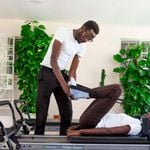
Like Ms Wangari, Ms Chehar notes that the majority of their male clientele did not simply walk into the studios and enrol in classes.

“I think all of our male clients have been referred to us because of injuries they sustained or picked up. We have rehabilitated a number, especially those who sustained those injuries from playing golf.”

Pilates movement system emphasises controlled, precise movements that build strength from the inside out.

Photo credit: Shutterstock

Despite this trend, the experts insist that Kenyan men, particularly those past 40, need to look beyond the noise and rethink Pilates, not as a trend, but as a long-term investment in their bodies.

“Whether as a primary workout or a complement to weight training, Pilates offers something many ageing bodies desperately need. The truth, however uncomfortable, is that muscle loss and declining energy begin quietly, often just after the high-octane years of your 20s. By the time you hit your 30s, many people start wishing they could borrow some of that old vigour to stay strong and build muscle. But nature, as always, keeps its own timetable,” Chehar notes.

By the 40s, the body undergoes even more changes. Weight gain can feel sudden, almost as if a switch has been flipped. Staying sharp, strong and mobile now demands far more effort than it once did.

Experts point out that even if you have been active all along, energy decline with age is unavoidable.

This is why, for many men, even lifting weights begins to feel less empowering and more punishing. Pilates, they argue, offers a gentler but deeply effective alternative, one that works with the body rather than against it, and might just be the quiet game-changer men did not know they needed.

“I always say Pilates is for all abilities, all ages and all conditions. It's one of the very few exercises that works the mind, the muscles and even the soul. It's a very holistic fitness system,” Wangari says.

Men who do it

Elite athletes with some of the well-toned bodies have long embraced Pilates — from David Beckham, Andy Murray, LeBron James and Tiger Woods. Pilates is also incorporated into their training regimens.

For Kenyan men in their 40s, Wangari says Pilates is especially effective because of its low impact on the ageing body and declining energy levels, while still strengthening the body.

“For anyone in their 40s, it improves flexibility and mobility, because as you age, the body stiffens. As a secondary workout, especially for men who lift weights or do high-impact exercises, it becomes extremely important for injury management and body alignment.”

Wangari observes similar benefits for women entering menopause, which typically begins from the age of 45, although some women experience it earlier.

“When women enter menopause, their bodies undergo changes due to hormonal shifts. A good number of research studies suggest that high-impact exercises aren’t very good for women in menopause, and that’s where Pilates becomes a strong alternative.”

Less time, more fitness gains

Chehar notes that Pilates is also ideal because even a 30-minute session can be effective, unlike many other exercises that require longer durations to maximise results.

“Unlike trendy workouts promising quick fixes, Pilates delivers sustainable results through gradual progression. With over 600 exercises, the Pilates method balances strength with flexibility while respecting your current capabilities. Whether you are going through hormonal shifts, experiencing changes in energy levels or simply want to build lasting fitness habits, Pilates provides a foundation that adapts and grows with you at every stage,” she notes.

Basi Pilates Academy co-owner Anuja Chehar during a workout session Nairobi on June 24, 2023.

Photo credit: Bonface Bogita | Nation Media Group

According to Wangari, the Pilates movement system emphasises controlled, precise movements that build strength from the inside out.

“In your 40s, the true value of Pilates comes from its focus on functional movement patterns that transfer directly to daily activities like carrying groceries, sitting on the toilet, maintaining good posture at your desk or bending to pick something up safely. Pilate movements target common issues you may already be facing as you age, including weakened core muscles, reduced flexibility and shifting weight distribution,” she says.

She adds that, as a low-Impact workout, Pilates offers particular benefits to the ageing body.

“The controlled, flowing movements of Pilates minimise pressure on the knees, hips and spine while building strength and endurance. A typical session works the muscles to fatigue through resistance and bodyweight challenges rather than through jarring movements common in the gym or with weight-lifting.

“Pilates is not about shocking the muscles, but rather, attempting resistance with your body muscles. The exercises also generally distribute effort across your entire body rather than targeting a specific part of your body or muscle. That way, it helps create balanced muscular development that prevents you from overexercising the more vulnerable areas,” Wangari explains.

While you might experience soreness after an intense lifting session, this is rarely the case with Pilates.

“It isn’t unusual to feel worked out but not worn out after Pilates, which is a good indication that you exercised and experienced muscle fatigue without the exhaustion that often accompanies more physically demanding workouts,” Chehar adds.

PAYE Tax Calculator

Note: The results are not exact but very close to the actual.