Koko Networks Chief Executive and Co-Founder Greg Murray has spent much of his time pursuing innovations on clean energy in a bid to reduce the environmental pollution from fossil fuels in frontier markets.
On his LinkedIn profile, Mr Murray, an Australian national, describes himself as a climate entrepreneur who has spent 20 years building innovations for energy transition and protecting forests across four continents.

Together with Nicholas Stokes, Sagun Saxena and others, Mr Murray founded Koko Networks in 2013 and set eyes on Kenyan households that had for decades relied on dirty cooking fuels such as kerosene, charcoal and firewood.
“Australian climate entrepreneur, scaling technology for energy transition and forest protection,
20 years of experience in emerging and frontier markets—Africa, Asia, Middle East, Latin America,” says Mr Murray on his LinkedIn profile.
He is a member of the governing board of Renewable Energy and Energy Efficiency Partnership, a multilateral organisation formed to speed up the uptake of clean energy solutions and mitigate greenhouse gas emissions in emerging markets. He took this position in 2022.
Mr Murray is a Managing Partner and Co-Founder of CleanStar, the biggest shareholder of Koko, a position he has held since 2007.
Before venturing into the clean energy space, Mr Murray worked as an accountant at KPMG in his home country. He served for three years until 2000, when he left to work as the Operations Manager at Telecoms Clarity, which is owned by KPMG.
He left Telecoms Clarity in 2003 and ventured into consultancy, researching environmental ventures in Latin America, Europe and Africa.
His first stint in the energy sector was from 2005 to 2007, when he worked at Templeton Galt as the director for the Middle East and Africa.
Mr Murray was the face of Koko and oversaw ambitious growth in 11 years, a period during which the startup gained an estimated 1.5 million customers who turned to Koko’s biofuel and cooking stoves, both sold at subsidised prices of Sh100 a litre and Sh1,500, respectively.
The startup targeted an additional two million customers by December 2027, in an ambitious expansion plan riding on efforts to cut the use of dirty cooking fuels.
However, those dreams came crashing down when the firm announced an end to its operations in Kenya following a fallout with the government over approval to sell carbon credits abroad to raise money for its subsidised fuel and cooking stoves.
Koko banked on an agreement with the government to sell carbon credits earned from its clean fuel business and fund the subsidy programme.
The government renegaded on this agreement that was inked in June 2024, granting Koko ownership rights over carbon credits, allowing it to freely transfer the credits while the government committed not to resell these credits.
Kenya was Koko’s biggest market in Africa. A first-ever political insurance for carbon trading given to the startup last year underscored Koko’s rising stature in the world of clean fuel and the fight against pollution of the environment by fossil fuels.
Multilateral Guarantee Agency (MIGA), the guarantee arm of the World Bank, issued the 15-year security worth $179.64 million (Sh23.18 billion).
But one of the conditions of the insurance has now exposed taxpayers to a bill of Sh23 billion, which is the penalty slapped on the government of Kenya for breach of the contract.
Koko is yet to issue a statement following the abrupt exit that has left Kenyan households in the lurch. The government has come out guns blazing, casting doubts on the size of the carbon credits that the startup targeted to sell.
Extinguished dreams
Mr Murray, a commerce graduate of the University of New South Wales, has also been quiet despite the closure of the Kenyan operations.
The startup raised an estimated $100 million (Sh12.9 billion at current exchange rates) in debt and equity from major international investors. It invested $300 million (Sh38.7 billion) in Kenya, with half of this going to building the infrastructure that produced and delivered Koko fuel to customers.
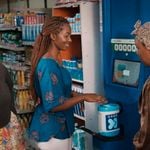
Koko had an estimated 3,000 automated fuel vending machines across the country, with 2,000 of these in Nairobi. It had more than 700 staff.
Its abrupt exit has extinguished Mr Murray’s dream to scale up the use of Koko fuel in Kenya’s far-flung villages.
“We are also exploring ways of expanding our business into more rural areas, but there we present more of a time-saving than cost-saving opportunity, because people collect wood from the forest for cooking fuel rather than buying charcoal,” said Mr Murray in an earlier interview.
And with its exit, thousands of low-income households have been left in the dark and a possible return to smoke from the use of charcoal.
The blue flame of Koko fuel is now turning into a distant memory for many of the households in the low-income areas of Nairobi, such as Mathare and Mwiki.
The conspicuous Koko fuel canisters and cooking stoves are most likely to turn to scrap and a painful reminder of the shattered dream that took smoke from the kitchens of low-income homes.
Barely eight months after the Sh23.18 billion guarantee from MIGA gave hope to thousands of Kenyans’ homes, anguish has replaced the excitement and cooking is set to become a dirty affair.