Mombasa port Monopoly sparks legal battle between tycoon and Joho family

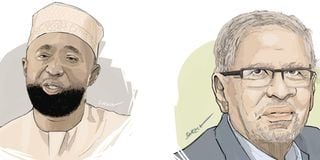
Yusuf Abubakar Joho, brother of former Mombasa governor Hassan Joho (left) and Mohammed Jaffer, chairman of MJ Group.

Photo credit: John Nyaga | Nation Media Group

The modest setting of the Mombasa Magistrate’s Court, where Yusuf Abubakar Joho is testifying as a prosecution witness, provides can't hint of the billions of shillings at stake—until the Mining Cabinet Secretary’s brother begins to speak.

Mr Abubakar—popularly known as Abu—speaks with intensity about the long-running battle his family has fought with one of the most powerful men in Kenya. Mohammed Jaffer, a reclusive billionaire who styles himself as the “port man,” has over the years entrenched his commercial dominance at the country’s largest port, retaining an iron grip over critical import infrastructure.
Through the MJ Group, which he chairs, and his son Mujtaba operates, Jaffer has for years exercised dominant control over grain and LPG handling at the Port of Mombasa.

His interests also extend to edible oil, fertiliser, and clinker terminals—cementing his position as one of the most influential private players in Kenya’s maritime trade.

It was Jaffer’s dominance in grain handling that the Joho family set out to challenge, a move that set off a bruising confrontation between two of Mombasa’s most powerful families. Then the battle turned dirty.

Abu told the court that he received a defamatory letter, which his investigations linked to Matilda Kinzani, whom he described as a long-time personal assistant to businessman Jaffer, the owner of Grain Bulk Handlers Limited (GBHL).

“He (Jaffer) is my neighbour at work and we compete in business,” Abu testified. “We compete in rail services and cargo handling, so business rivalry between us is normal.”

What began as a dispute over a grain-handling facility at the Port of Mombasa between two of the coastal city’s most powerful families has since escalated into a high-profile defamation lawsuit, now complicated by a counter-claim that the allegedly defamatory content was generated using artificial intelligence.

Abu narrated how for over two decades he had been receiving defamatory letters. This was the first time he had been able to trace the source of a defamatory communication, he added.

The allegations, he told the court, had gravely damaged his reputation, including claims that he was involved in drug trafficking and that he laced rice with drugs before selling it.

He added that his brother, former Mombasa governor Hassan Joho, had also been accused of stealing Sh40 billion during his tenure, while family-linked companies were accused of land theft.

According to Abu, the dispute escalated after his family entered the grain-handling business, a sector long dominated by GBHL. “I have entered a similar business, and that is why I am getting all these problems,” he said.

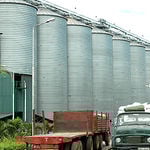
For more than three decades, Jaffer enjoyed exclusive control over the flow of imported grain—including wheat, rice and maize—into Kenya, Uganda, South Sudan, Rwanda, the Democratic Republic of Congo and the World Food Programme, raking in billions of shillings in profits.

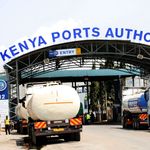
Since 2000, the Kenya Ports Authority (KPA) had licensed GBHL—80 percent owned by Jaffer—to handle all bulk grain imports at berths 3 and 4 of the Port of Mombasa. The exclusive mandate, initially granted for eight years to allow recovery of investment costs, expired on February 15, 2008.

Following its expiry, pressure mounted to liberalise bulk grain handling and introduce competition, driven by surging cereal imports—particularly wheat, whose volumes more than quadrupled as consumption patterns changed.

Traders complained that reliance on a single handler led to clearance delays and high storage charges, prompting KPA’s board to approve the construction of a second grain-handling facility.

In 2022, the Kenya Ports Authority awarded the Joho family, through Portside Freight Terminals, Portside CFS Limited and Heartland Terminals, a Sh5.9 billion contract to build a second grain handling facility, citing food security concerns and the need to reduce reliance on a single operator.

KPA’s masterplan framed the move as promoting competition under the Competition Act. The award triggered litigation over use of the Specially Permitted Procurement Procedure (SPPP).

Dock Workers Union and Senator Okiya Omtatah won at the High Court, which quashed the deal, but the Court of Appeal reinstated it, ruling SPPP thresholds were met on appeal.

It was around mid-2024—after the appellate ruling—that Abu lodged a defamation complaint following the circulation of alleged defamatory content on social media during nationwide protests. The material was widely shared on WhatsApp groups, prompting criminal defamation proceedings.

The case continues in Mombasa, with disputes over authorship and digital evidence. Defence lawyer Michael Oloo told the High Court that a contested forensic report “had no author, no date, no signature and no exhibit memo,” arguing it was computer-generated.

More recently, the Supreme Court overturned the Court of Appeal decision, ruling that the procurement failed to meet the constitutional threshold of fairness, transparency and competitiveness under Article 227—adding another twist to a dispute where commercial rivalry, public interest and reputational battles have become tightly intertwined. The criminal case against Kinzani continues at the Mombasa Magistrate's Court.

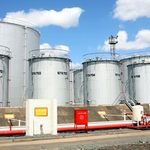
Meanwhile, Jaffer’s monopoly in LPG is being challenged by yet another powerful individual. Tanzanian billionaire Rostam Abdulrasul Aziz is setting up a second gas terminal at Dongo Kundu through his outfit Taifa Gas, one of the many attempts expected to end Jaffer’s monopoly.

In November, the High Court cleared The High Court has cleared Mr Aziz to set up a Sh16 billion cooking gas plant and storage facilities at the Mombasa port, escalating a vicious billionaire’s brawl against Jaffer.

Taifa Gas Investments SEZ Ltd got a reprieve after a court struck out a petition challenging its construction of a 30,000 metric tonnes of LPG terminus at Dongo Kundu Special Economic Zone in Likoni, Mombasa.

PAYE Tax Calculator

Note: The results are not exact but very close to the actual.