One of Moi’s six dreamers, then tasked with turning around Kenya’s economic fortunes, dies

DNPICKU0304(2)

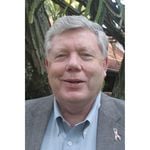
The late Prof Shem Migot-Adhola.

Photo credit: File | Nation Media Group

Shem Migot-Adhola, one of the six members of former President Daniel Moi’s Dream Team, has been mourned as an intellectual giant whose brains were frequently picked by governments, commercial banks, universities, research and international institutions.

Kisumu Governor Anyang’ Nyong’o described the late Prof Migot-Adhola, who died on October 22, as a “quintessential example of a public intellectual.”
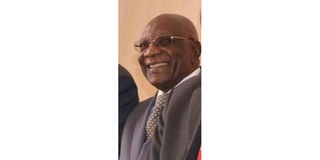
Prof Migot-Adhola held a PhD in Sociology of Development and a Master of Arts in Sociology from the University of California.
Yet it is his two-year stint as a member of the dream team that will dominate his legacy.

He is the third of the six-member dream team to die. Other members who have since passed on are paleontologist Richard Leakey and agricultural economist Wildred Leakey.

President Moi, who fell out with the donor community after 24 years of misrule characterised by graft and human rights violations, put together the Dream Team to sue for peace with the donors.

Barely a year after Moi had put together the team to turn around the economic fortunes of the country, frustrations crept in.

The team was tasked with smoothening relations between the Kanu government and Western donors and triggering the flow of donor billions which had been frozen due to the excesses by the ruling regime.

But a year later, the donors, mostly the Bretton Woods institutions such as the World Bank and the International Monetary Fund (IMF), had yet to re-open the funding taps.

An impatient Moi finally decided to pull the plug on the dream team in 2001. Three of the ‘dreamers’ were kicked out while the others were retained.

Leakey, who had been the Permanent Secretary and Head of Public Service was among those who were fired.

Also fired were Martin Oduor-Otieno, then Treasury PS and Titus Naikuni, the PS for Transport Information and Communication.

The other half of the team, which had been seconded from the World Bank, was spared.

Perhaps Moi did not want to further antagonise the donors, including the World Bank, which had seconded these individuals. The World Bank axis included Prof Migot-Adhola.

Others who were spared included Prof Wilfred Mwangi-then deputy PS and Director of Agriculture, and Mwangazi Mwachofi- the resident representative of the International Finance Corporation who was also appointed as Financial Secretary.

Prof Migot-Adhola was retained as the Agriculture PS while Mwagazi replaced Oduor at Treasury. Mwangi also retained his job as director of Agriculture.

When Moi appointed the "dream team" in 1999, the economy was beset with high inflation and unemployment rates.

International donors were increasingly concerned about corruption and mismanagement within the government and the country was experiencing political tension and instability.

Moi hoped that the team could implement reforms and restore investor confidence by reducing bureaucracy and improving efficiency, restructuring and privatising inefficient state-owned companies, reassuring international donors, and securing financial aid.

But, despite being paid well, the team struggled to help Moi sue for peace with the international donors.

Earlier in October 2000, a year before the team was disbanded, Parliament engaged in a heated debate on the remuneration of the six permanent secretaries (PSs). It emerged that their salaries were much higher than those of the other PSs.

Orwa Ojode (now deceased), wanted to know from the then Finance Minister Chris Okemo why the government allegedly had three categories of PSs. Ojode was the then MP for Ndhiwa Constituency.

“There is one category which earns Sh36,000 per month and there is a second which earns Sh300,000 per month and then there is this dream team who are still dreaming,” said Ojode.

The dream team’s total emoluments including salaries, medical, housing allowance and other allowances, Mr Okemo told Parliament, amounted to Sh10.8 million in a month. Asked to breakdown payment to each of the six technocrats, Okemo declined saying it was confidential.

However, Ojode alleged Leakey received a monthly pay of Sh2.4 million, Mwachofi (Sh2.4 million), and Migot-Adhola (Sh2 million). Oduor-Otieno and Naikuni, Ojode said, would each receive Sh1.5 million every month while Prof Mwangi pocketed Sh1.2 million every month.

Mr Okemo said that the six, who had been seconded to the government by their respective institutions, would be paid by their respective employers with the government reimbursing the money.

“Mr Speaker, Sir, could the minister tell this House how long this secondment will be in place, because the Kenya Government is spending Sh12.5 million for only six dreamers?” wondered Ojode.

Ojode, who later became the assistant Minister for Provincial Administration and Internal Security in President Mwai Kibaki’s government, said that if the government paid only Sh100,000 to all the 15 PSs then it would spend only Sh1.5 million.

“Why should we spend Sh12.5 million on only six people who are still dreaming and yet there are people who are qualified to do those jobs? You are demoralising those other PSs,” said Ojode.

Professor Nyong’o says that when Kibaki appointed him minister for National Planning under the reform government of the National Rainbow Coalition in 2002, the first person he reached to was Migot-Adhola and would help him lay the intellectual foundation for his new job.

In 2017, President Uhuru Kenyatta appointed him as the new chair of the Council of Kenyatta University. The two fell out in the sunset years of Mr Kenyatta’s presidency over plans to acquire the college’s land ostensibly to establish the World Health Organisation’s research facility.

The university resisted the move by state agents to hive off part of its land without observing due process, leading to the firing of Prof Migot-Adhola and the university’s vice-chancellor.

PAYE Tax Calculator

Note: The results are not exact but very close to the actual.