Time flies with great content! Renew in to keep enjoying all our premium content.
Prime
Leonard Ngunga: The cardiologist training Kenyans to heal their own hearts
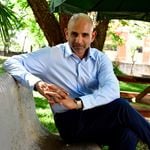
Dr Leonard Ngunga, a Consultant Interventional Cardiologist and Head of Cardiac Care, at the Aga Khan University Hospital during the interview on January 21, 2026.
Photo credit: Francis Nderitu | Nation Media Group
It’s the carpentry of bones that intrigued him at the start. How someone could arrive with a broken limb and, through pulling, setting, casting, be walking again months later—the bone healed. The artistry of it is astonishing. The big-bone energy. “Orthopaedics felt like carpentry,” says Dr Leonard Ngunga. “This idea of working with your hands.”
So his first love wasn’t the heart. It was bones. The heart came accidentally—sneakily, the way hearts often do. And once it arrived, it was relentless. It wanted what it wanted. And it wanted Ngunga.
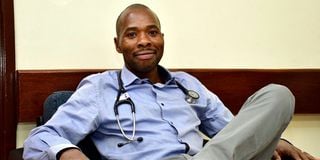
Today, after years of training and experience, Dr Ngunga, a Consultant Interventional Cardiologist, serves as Head of Cardiac Care at Aga Khan University Hospital, while also leading nationally as President of the Kenya Cardiac Society.
As the Assistant Professor of Medicine and Cardiology Fellowship Training Programme Director, he’s building one of the country’s strongest cardiology training programmes—so young doctors don’t have to uproot their families for costly training abroad, the way he once did.
He recently turned 50 and marked it by running 50 kilometres to raise Sh50 million for a multi-purpose hall at St Paul’s Kyanga Secondary School in Makueni County, where he hails from. “It’s aligned with the spirit of giving,” he explains, “but also with the spirit of doing difficult things—going beyond what you imagine your limits are.”
That, more than anything, is what he wants to be known for—not just as a cardiologist, but as a teacher who pushes people beyond what they think they’re capable of. And so it turns out carpentry, medicine, and teaching all ask for the same thing: steady hands and the courage to try.
First, before we get into it, what happens to the heart during heartbreak for someone to declare that they are heartbroken?
[Laughs] When the body is under a lot of stress, it releases stress hormones—large amounts of them. And sometimes, those hormones have very real physical effects. That’s why, when you’re stressed, the heart can feel heavy. But the problem doesn’t start there. It starts in the brain. The brain releases the hormones, and the heart takes the hit.
In some cases, heartbreak becomes literal. There’s a condition we call Takotsubo syndrome. The name is Japanese—takotsubo is a kind of octopus trap. In this condition, the heart weakens, balloons out, and can fail. Patients can die from it. So yes—people really can die of heartbreak.
What drove you the most in high school?
Local competitions. My high school - Mang'u High - was extremely competitive. You arrive there thinking you’re a bright boy, only to discover there are many other bright boys—some even brighter. So you’re all bright.
When I did my first exam and came out number three, something clicked. I thought, wait—so I can actually do this? I can beat these boys? That was my first real excitement. From then on, I knew I could compete at the top. I found myself constantly in that space. Our culture was simple: good grades, serious reading.
So, there is nobody out there who is surprised you became a cardiologist?
No. [Laughs]. I doubt.
Was there a point in this journey that you questioned the path of medicine?
Yes, during my master’s. By that time, many of my peers were already moving ahead. Banks, NGOs, good money, marriages. Meanwhile, I was a resident—basically an intern—working extremely hard with no income. Money didn’t even feature in my thinking, but it was everywhere around me. And that’s when I start asking myself, what am I really doing here?
Still, I pushed through.
Around the time we finished, Aga Khan Hospital was expanding into cardiology, cancer, and chronic disease—areas that had been neglected as government training focused on infectious diseases and HIV. I moved into that space and got an opportunity to train in Canada. I went with my family. The children were young. It was very cold.
When I returned, I wanted to keep that spirit alive. Instead of doctors having to leave their families late in their careers for expensive training abroad, we decided to build a programme here. Today, our fellows can train locally. They don’t have to uproot their families. We now run one of the best cardiology training programmes in the country—and we’re still expanding.
Why cardiology and not, say, paediatrics?
My first love wasn’t cardiology at all. It was orthopaedics. Bones. In medical school, I'd go to the theatre and watch orthopaedic surgeons at work. Someone would come in with broken bones and we’d sit there—pull, push, fix—until eventually the leg came out straight. Then a few days later you’d see the patient walking around with a cast. I found that very fulfilling. It was very hands-on work. Almost like carpentry. That’s what attracted me.
So I applied for surgery very early—actually before I’d even finished my internship. I went for the interview too soon, and I wasn’t selected. They usually prefer older doctors who’ve had a year or two of experience outside. I failed that first interview.
The following year, instead of going back for orthopaedics, I applied for medicine. I just wanted to get into postgraduate training. Staying too long as a medical officer isn’t a good thing. I was accepted at the University of Nairobi, but at the time I was working for the government. This was around 2003. I was supposed to join the following year. In the same period, I also interviewed here—and I was accepted. So I chose the residency here, in medicine.
What are you currently trying to discover about the heart?
One of the biggest challenges we face is weak hearts. When the heart fails, treatment options are limited, and young patients die.
This isn’t new, but it’s a service we now feel compelled to introduce. As president of the Kenya Cardiac Society, I believe heart transplantation must be part of our care—because it is curative.
Dr Leonard Ngunga is the President of the Kenya Cardiac Society.
Photo credit: Francis Nderitu | Nation Media Group
Every year, we lose hundreds of healthy hearts, while patients who could be saved die because theirs are failing. These two realities need to meet. A healthy heart can give someone a normal life. A family grieves a loss, yes—but there is meaning in knowing another life was saved. This has to be national.
Organ sharing belongs to everyone. It cannot be an Aga Khan programme; it must be a Kenyan one. That means a donor system, possibly an opt-out model, as used in much of Europe. These things take time and planning. A heart transplant can take someone from 10 medications to two, and return them to work and life—for a decade or more. That is worth pushing for.
What do you want to be known for?
I want to be known as a teacher—someone who pushes people beyond what they think they are capable of. Because that’s what happened to me. Someone once told me I could become a doctor. I hadn’t even thought about it. I worked hard, and here I am. Which brings me to the 50-and-50 idea—people being asked to do hard things.
I was asked to help lead a church school where I grew up, in Makueni County. I didn’t want to. But they said they had no one else, so I agreed. At first, I supported quietly. Over time, the school improved. When I eventually stepped in fully, I saw how far behind it was. It needed direction. And I thought: these children may not all be mathematicians, but they are good at something—art, drama, music. So I said, let’s build a multipurpose hall.
Then came the question of money. And I thought—if I say I’m going to run, people might say, we can help this man. [Laughs]. A year ago I never thought I could run 50 kilometres but the moment I said 50, everything changed. Forty-two stopped being the goal. And that’s what I want to push people to do—to go beyond what they think they can. If I can help more doctors stretch themselves the way I’ve stretched myself—here, with what we have—that would be my joy. We are still trying to meet the Sh50 million target.
When and why did you start running?
When I went to Canada to train, the residency was brutal. We worked day and night. We were poor, and eating became the priority. By 2009, when I joined the cardiology centre, I weighed about 90 kilos—the biggest person there, and also the poorest.
My colleagues were lean, calm, doing very serious work. That’s when I realised you don’t have to be big to do serious things. [Laughs] I joined a subsidised YMCA gym downtown and also started running. I lost 20 kilos; went from 90 to 70, and I’m still there more than 15 years later.
It changed how I saw myself. In Kenya, we were taught that success had to look a certain way—big body, visible comfort. That thinking is changing. Young men don’t carry it anymore. And that’s a good thing.
Do you have any fresh or new reflections now that you've got into your fifth floor?
That’s a good question. One of the reflections I’ve come to is this: you are here on your own. If something needs to be done, just do it. You don’t need anyone’s permission. But more importantly, I’ve learned the value of helping people. Whenever you help others, something interesting happens—you often find yourself helping yourself.
As a guy used to excellence, to achieving highly, what failures have you grappled with?
But beyond that, I’ve learned that education is not everything. Sometimes you fail—not at work, not academically—but in other areas of life. You grow up thinking everything works like school: you prepare, and things fall into place. Then you cross over into family life, into relationships, into non-academic spaces—and suddenly things are not that simple. I think that’s where I struggle.
I don’t think I’m very clever when it comes to family issues. I don’t think I do very well. Luckily, my wife cushions me a lot. Though sometimes she also complains that I don’t do enough of the things I should be doing. And I tell her—I honestly don’t know. I try to forgive myself.
I tell myself I’m willing to learn the things I may have missed while I was busy learning other things. But if I’m being honest, that side of life—family dynamics—I’m not very good at it. Even with my children, I’m careful. I don’t like telling them too many things. I’m afraid I may tell them the wrong things, or influence them the wrong way.
My son - Ian Ngunga - by the way, is doing very well. He achieved the highest mark in Kenya for Cambridge International for A level Biology last year. He’s in Toronto, Canada now, studying life sciences but with plans to study medicine. The truth is, I didn’t assist him much. I didn’t help him fill forms. I didn’t guide him closely. My wife did most of that. I deliberately stayed back.
Do you think you're a good father?
That’s a question I ask myself all the time. [Laughs] Am I a better father when I’m there—or when I’m not? [Pause] And sometimes I’m only partially there. Because you can be present and still make things worse—by telling people how to do things, by interfering. I’m never completely sure about that balance.
I have three children. The firstborn is in university. The middle child is aged 17. The last one is 14. Professionally, the demands are heavy.
When do you have time for yourself?
My idea of time for myself is quiet structure. Sitting at home, planning, learning, organising my thoughts. That’s when my mind settles. Golf came later. A few years into consultancy, I suddenly had free Saturdays and realised I couldn’t just sleep in. So I took up golf. It gave me structure. It quietly disciplined me—where I go, how I drink, how I spend my time.
What do you fear?
My biggest fear is failing myself. Not achieving what I set out to do. Sometimes I look at my own goals and wonder if I was being unrealistic. We plan as if we’re invincible, forgetting how many variables life throws at us. I’m also the sole earner in my family. That responsibility adds weight.
My wife stays at home—we decided that together—because my work is demanding. So the fear is always there: what if I don’t get there?
Has golf made you a better doctor or even a better human?
[Pause] Golf put me in spaces where I met people of a different calibre and that kind of exposure matters. I believe you need to be around people who are better than you. That’s how you realise the gap—how much further you can go, how much more you can achieve.
There’s a saying: if you find yourself the best person in the room, you’re probably in the wrong place. On the course you meet people at different levels, people who are better than you in many ways. And being able to sit with them, talk with them—that’s a good place to be.