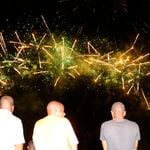
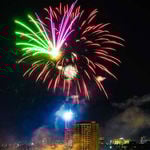
On December 31st, as the clock inches toward midnight, many of us will be holding our breath, ready to welcome the new year with family and friends. Many will do the final countdown—10...9...8...7...1—and then usher in 2026, a year they hope brings joy, prosperity, and good tidings. It's become tradition: as those of us in cities crane our necks skyward, waiting for the fireworks that will burst across the skylines, followed by the roar of thousands of revellers.
For those with the means, the night unfolds at hotels and restaurants where they eat, drink, and dance into the early hours. Others watch from their balconies or drive up to the Nairobi Expressway, hunting for the perfect vantage point to catch multiple displays lighting up the city at once.
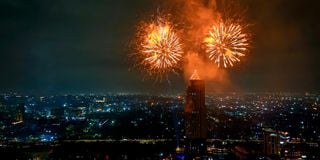
But have you ever wondered what goes into pulling off these dazzling shows? What safety measures are in place and why you shouldn't attempt this at home? Also, what separates a good display from a truly memorable one? And what can you expect this year?
We spoke to establishments known for their New Year's Eve experiences—Ole Sereni, Holiday Inn at Two Rivers, and Tamarind Group of Hotels—as well as Jays Pyrotechnics Limited, the team behind many of these displays, to understand the choreography, planning, and artistry that make midnight magic happen.
The science of fireworks
When you see a 10-minute fireworks display burst across the sky, what you don't see are the months of preparation that came before it. Jayshree (Jay) Suchak, master pyrotechnician and founder of Jays Pyrotechnic and the only master pyrotechnician in Africa designs every show from scratch. Each firework is customised from the chemical composition to the blast pattern you see in the sky.
“The concept depends on the venue, the crowd size, and where people will be positioned. It involves science, strategy, and experience,” he explains. Jay has turned fireworks into an art form. The company manufactures its own fireworks at a factory near Konza, meaning no two shows are alike. The designs, colours, and bursts are never repeated.
But it's not just about making things look pretty. Safety comes first. Ole Sereni's chief engineer George Salee describes the preparation like an engineering project rather than an entertainment add-on. “Preparation typically starts several months in advance and involves site surveys, risk assessments, regulatory approvals, and detailed technical planning,” he says. By the time the display happens, there should be no unknowns.
Safety comes first
Here's something most people don't think about: For example, Nairobi's fireworks displays happen near major infrastructure—airports, residential areas, wildlife zones. Ole Sereni sits close to Wilson Airport and the Nairobi National Park. Carnivore is surrounded by residential neighbourhoods and an airport. Two Rivers is a bustling commercial hub.
So how do they pull it off safely? Every site gets its own risk assessment. Jays Pyrotechnics notifies relevant agencies about firing layouts, exclusion zones, and safety distances.
For Ole Sereni, this means coordinating with aviation authorities and adhering strictly to height limits. “Fireworks are designed to remain well below regulated airspace thresholds, and the display duration is communicated in advance with a licence issued,” Salee explains.
At Carnivore, Jacqueline Nyambura, the Tamarind Group's marketing manager, says they constantly coordinate with the control tower and check weather reports. “We also use eco-friendly materials such as combustible casings that don't use heavy metals to minimise pollutants.”
All of Jays Pyrotechnics' fireworks are eco-friendly—no barium or sulfuric nitrate, which means no smoke. They're ISO certified and TUV certified, meaning nothing falls down when they burst. The company has also developed technology to disable misfires mid-air. “If a firework goes astray, we can trajectorise it and disable it in the air.”
And here's a word of caution for those tempted to try this at home: DON’T. “All our consumer-grade fireworks are made for DIY use and, when used correctly, pose minimal risk. However, there are brokers and unlicensed dealers who buy and sell unknowingly, creating dangers to people and property," warns Jay.
The D-day
On the actual day, everything follows a structured process. At Ole Sereni as in most licensed venues, the morning starts with a final site inspection. Firing zones and safety perimeters are rechecked. Weather forecasts are reviewed in detail. Fire extinguishers, water points, and emergency equipment are positioned.
By midday, fireworks are delivered under strict controls and stored in approved temporary magazines. The pyrotechnics team sets up firing racks, lays electrical firing cables, and programs the firing sequence.
Just before midnight, final wind checks are done. If conditions are outside safe limits, the display is adjusted or delayed. Once cleared, the display is executed exactly as rehearsed.
“Weather is one of the most critical variables and is monitored continuously right up to firing time,” says Chief Engineer, Salee. Wind affects drift and fallout, so shell sizes, heights, and even the sequence order can be changed at the last minute. Humidity can impact ignition reliability. Temperature affects burn rates and the accuracy of timing.
The meteorological department has predicted rain for December 31st this year, but the establishments aren’t worried. “The fireworks are waterproof, so rain does not affect them. We will go on as scheduled,” quips Jacqueline.
After the display, the site is inspected for misfires or debris, which are safely neutralised and removed before areas are reopened.
Unique experience
Tamarind does things a little differently. While most venues launch their fireworks right at midnight, Carnivore waits until 12:07. “When you have so many fireworks going off at the same time across the city, you don't get to engage in your own display because you're hearing the noises and seeing the others,” explains Jacqueline. “With ours, by then, all the others have ended. So we get to experience just ours. There are no distractions.”
At Carnivore it’s a tradition that's been going on for over 50 years. More than 50 percent of their guests are repeat customers. Guests enjoy the Beast of the Feast—an all-you-can-eat Brazilian experience with meat on Masai swords, including crocodile and ostrich balls—before heading into the garden for the 10-minute display.
The experience costs Sh9,000 per person, and they're expecting 3,000 to 4,000 guests across their three venues on their Nairobi grounds.
At Ole Sereni, the focus is on variety. They have four different outlets across four floors, each offering a distinct experience. The ground floor has a la carte specials ranging from Sh2,500 to Sh6,500 with live DJs.
Big Five Restaurant offers an all-you-can-eat African cuisine buffet for Sh6,500 with a live band. The Dish Restaurant serves continental Brazilian cuisine for Sh7,500, also with a live band. All outlets open at 6 p.m. and run through midnight and beyond.
Dennis Kamwerengo, Ole Sereni's F&B Manager, says they're expecting around 1,500 guests, a slightly higher number than previous years. “People haven't travelled as much this season, so there's been more traffic in Nairobi over this festive period.” They started planning three months ago, doing food tastings, checking recipes, and inviting mystery guests to review their offerings. “Every year, we change our recipes and dishes.”
Holiday Inn at Two Rivers takes a more intimate approach. Pooja Patel, the general manager, says they like to keep it between 60 to 80 guests. “I don't like tables to be squeezed. That's the perfect size for people to enjoy a customised experience.”
At Sh6,000 per person, guests get a grand buffet with a live grill station and bottomless cocktails and mocktails. “And when I say bottomless, I mean bottomless, you drink to your satisfaction.” The hotel has a display of fireworks from Two Rivers Mall, which everyone enjoys.
The hotel leverages data to personalise the experience. “Many of these guests have been with us throughout the year, so we know which table they prefer, which drink they love, how they like it prepared,” says Pooja. They're almost fully booked already.
More than fireworks- behind the scenes
Pulling off a perfect New Year's Eve isn't just about fireworks; it's about managing everything that happens around them. At Ole Sereni, the ratio is one waiter to every 25 guests.
The hotel started planning three months ago and can meet about 90 per cent of its staffing needs with its existing team across its two hotels and multiple restaurants.
Dennis explains that their booking system is now online. “Guests can go to the Ole Sereni platform or our website to book their table, make payment, and choose their cuisine, and everything is reserved digitally.” Technology has made the process much smoother compared to previous years, when people had to call or visit in person.
The investment isn't small. Ole Sereni spends around half a million shillings to put up the entire event for planning, entertainment, staff uniforms, and everything else. But they're able to recoup that. Carnivore's fireworks alone start at Sh250,000, but Jacqueline says it's “a small investment to give the guests a great experience.”
Holiday Inn's Pooja notes that staycations have increased tenfold since she joined in May 2024. “People are learning to treat themselves more. They want to spoil themselves. They want to go out to a nice hotel or a nice place where they can enjoy good food, good service, and really be spoiled. You don't want to stay at home and worry about who's going to host and who's going to clean up the next day.”
What's trending this year
Musical fireworks are the big thing now. These are sequences timed to a song, so you might hear “Happy New Year” with bursts punctuating each phrase. Jacqueline says people are also moving toward pastel colours and peacock designs.
At Holiday Inn, Pooja is keeping this year's surprise under wraps, but she promises something different from previous years. “There's always something new every year, that's why people keep coming back.” Ole Sereni is taking the same approach, with a "wow factor" they're not revealing yet.
Pooja says she has worked in different locations across Nairobi over the past seven years, and every venue has had an impact. “You see the traffic at midnight, and it's really intense. People lining up on the Expressway to see the fireworks at JW's, people lining up in Upper Hill to see the fireworks at Old Mutual, and Two Rivers gets packed. It’s become a tradition”