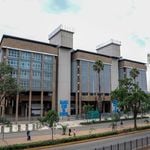
The Central Bank of Kenya's DhowCSD bonds platform was hit by a glitch when generating payment invoices for the January Treasury bond sale, resulting in some investors being asked to pay up to two times their bid amounts.
The bond sale closed on January 7 and the settlement of successful bids was due on January 12. A payment notification sent to investors asked them to pay double the amount they had bid, with the CBK telling those who complained that the matter was being addressed.
This anomaly, however, risked subjecting unsuspecting buyers to overpayments for their bids, which would subsequently force the CBK into making refunds given that it had already published the results of the bond.
By the time of going to press, the CBK had not responded to the Business Daily queries on the extent of the issue in terms of the number of investors affected, the amounts involved and whether it had been fixed by the time the payment deadline lapsed on Monday.
It was also not clear whether the bank would penalise those who failed to pay an overstated amount when settling their bids.
The January bond comprised a pair of reopened 20 and 25-year bonds, targeting Sh60 billion.
Investors offered the government a total of Sh71.54 billion on the pair of papers, with the CBK taking up Sh60.58 billion.
The 25-year paper, which was initially brought to the market in September 2022, has 21.8 years to maturity and a coupon of 14.18 percent, while the 20-year bond that pays annual interest of 12.87 percent was first sold in March 2019, giving it a period to maturity of 13.2 years.
The longer dated bond attracted a larger volume of bids at Sh48.18 billion, of which Sh40.34 billion was accepted, while the 20-year paper had bids worth Sh23.36 billion, with the CBK taking up Sh20.24 billion.
Retail investor access to the primary bonds and Treasury bills market (new bond issuances by the CBK) has improved since the CBK introduced the DhowCSD platform in July 2023, replacing the previous manual applications for the debt instruments.
Like any digital platform however, the DhowCSD can fall victim to occasional glitches. In May 2024, holders of a 6.5-year infrastructure bond that was sold in 2023 received a coupon notification from the system that indicated their interest payment was liable to a withholding tax of 15 percent, despite the fact that infrastructure bonds are tax exempt.
The CBK, however, sent a new notice to investors saying that the anomaly had been addressed, and that they would receive their coupon payments in full in two tranches on May 13, 2024.
Fixed rate Treasury bonds are subject to a withholding tax of 15 percent for tenors of five years and below, and 10 percent for those of a tenor above five percent. The DhowCSD platform has made it easier to buy bonds through online bids on mobile phones or other digital devices, unlike the previous system where investors physically filled bid forms at their stockbrokers, banks or the CBK’s premises.
Payments would also be made over the counter either at banks or at the CBK, effectively locking out those without easy access to these premises from the bonds market.
Investment in the government paper by these retail investors has thus risen significantly over the last three years, also coinciding with a period of high interest rates in 2023 and 2024 when the CBK raised its base rate to 13 percent to fight elevated inflation and exchange rate volatility.
Households now hold Sh437.7 billion or 6.4 percent of the government's domestic debt, which stood at Sh6.84 trillion as at January 2, 2026. At the end of June 2025, they held Sh409.3 billion of the State’s domestic debt, CBK numbers show.