The controversial exclusive distribution contracts under the State’s subsidised fertiliser scheme cut off more than 200,000 jobs in the supply chain, a report by the World Bank revealed.
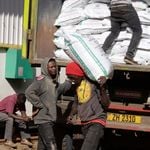
The multilateral lender stated that the second National Fertiliser Subsidy Programme (NFSP-2), implemented in partnership with the government and a select group of fertiliser importers, had disrupted existing private supply chains and eliminated thousands of jobs, particularly among last-mile agro-dealers.
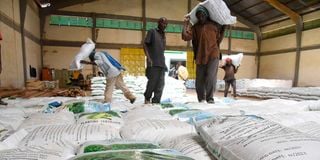
Under NFSP-2, the government centralised fertiliser importation and distribution, allowing only approved dealers to sell subsidised inputs, largely through state-linked channels.
“By establishing exclusivity in the distribution and retail of subsidised fertiliser, NFSP-2 could potentially be generating distribution inefficiencies and crowd-out equally efficient competitors,” said the World Bank.
“Loss of business at private distributors and agro-dealers is also estimated to have resulted in the loss of over 200,000 jobs along the supply chain.”
Contracted importers commit to making a certain amount of specific fertiliser types available for sale to any farmer at fixed, below-market retail prices negotiated with the government, which in turn commits to compensating them per bag sold.
This marked a sharp departure from the first subsidy programme, where fertiliser was imported on a commercial basis by private firms and distributed through a wide network of independent agro-dealers.
Before the programme was modified, vouchers with cash values were allocated to a target group of farmers. These vouchers could be redeemed at private agro-dealers.
The programme allowed importers, distributors and retailers along the supply chain to import fertiliser freely and set prices according to market incentives without negotiating with the government.
According to the World Bank, the programme also weakened access for farmers, particularly in remote areas, who were previously able to purchase subsidised fertiliser from nearby private outlets.
The shift forced many farmers to travel longer distances to access inputs, increasing costs and reducing timely uptake.
“In practice, this means most last-mile agro-dealers are unable to participate even if they can deliver better service to customers (for example, by being closer or offering even further discounts),” said the World Bank.
“The average distance a farmer must travel to reach the nearest NCPB depot is 18km, compared to 6km to the nearest private agro-dealer, more than doubling transportation costs incurred by farmers on average,” it added.
The findings add to growing scrutiny of Kenya’s subsidy-led interventions, with the World Bank urging the government to redesign such programmes to leverage private sector networks rather than replace them in order to protect jobs, while improving efficiency and service delivery.
“These impacts are not offset by lower costs from the theoretical advantages of the centralised approach: Estimates of all-in landing costs for fertiliser (that is, the cost to procure fertiliser and transport it to retail outlets) are roughly equivalent for NCPB and private players,” added the World Bank.
“In other words, based on available estimates, the NFSP-2 system fails to generate net cost efficiencies despite the pooled negotiating power of government, having fewer players earning markups along the supply chain, and delivering to fewer, more centrally located NCPB depots.”
Product mix
The World Bank further noted that the NFSP-2’s approach to determining product mix has shifted the market away from the earlier, market-determined product mix, affecting the uptake of market-specific blends and organics.
“Before the implementation of NFSP-2, market signals governed the product mix in the market, with ammonium phosphate (DAP) accounting for 37 percent of fertiliser imported by volume in 2019-2022, according to the United Nations Commodity Trade Statistics Database (UN COMTRADE) data,” the lender said.
“DAP is not a subsidised product under NFSP-2. As a result, DAP’s share of the market dropped to less than 25 percent after 2023, while a previously obscure product type, the NPK 23:23:0 blend, assigned a significant portion of the subsidy programme, saw its share rise significantly,” it added.