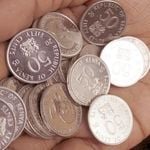
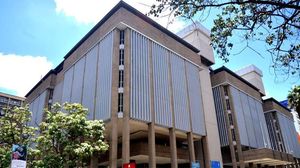
Patrick AlushulaThe Central Bank of Kenya (CBK) has put on sale about 281 tonnes of old and unserviceable coins, marking one of the unique asset-disposals undertaken by the regulator in recent years.
In a tender notice, CBK announced that it is seeking eligible companies —mainly metal smelting foundries and coin-minting firms— to buy and melt the coins that are unfit for further circulation due to being worn out or mutilated.
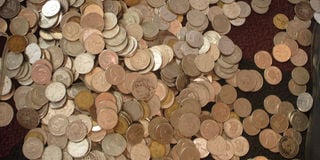
The move will see CBK clear 281,667 kilogrammes or about 281.67 tonnes of damaged coins in the CBK vaults, even as the regulator plans on minting new ones.
The bids will close on January 22, 2026, coming a month after bids for a three-year coin minting tender closed, signalling that CBK will replace the unserviceable coins with new pieces.
As currency handlers, central banks routinely withdraw coins and banknotes that have deteriorated through normal use. Such coins contain recoverable metals such as copper, nickel, aluminium, steel, bronze and brass which can be recycled for industrial purposes.
At the end of June 2025, CBK held coins worth Sh11.37 billion, most of them being in Sh20 coins (Sh4 billion), Sh10 coins (Sh4.02 billion) and Sh5 coins worth Sh1.95 billion.
The regulator has not specified the number of coins set for sale. Current coins weigh between 3.75 grammes and nine grammes. The heaviest ever circulating coin in Kenya is the 1985 five-shillings coin, which weighs 13.5 grammes. This seven-sided, copper-nickel coin was minted in the UK.
CBK has made it mandatory that it will witness the destruction of the coins and certify that the entire consignment has been rendered unusable.
“As part of the evaluation process CBK will require a commitment in writing that the successful bidder will allow the bank to inspect and confirm the smelting of the entire consignment of the old coins,” said CBK.
“It is expected that the bidder will notify the bank when ready to undertake the smelting/destruction and invite the bank’s team to witness the smelting and confirm in writing that the smelting is done to the satisfaction of the bank.”
The tender document shows the coins are stored at three CBK locations. The largest portion —196,373 kilogrammes— is held at the Mombasa branch. Nairobi head office warehouses contain 76,347 kilogrammes, while Kisumu outlet holds a smaller stock of 8,947 kilogrammes.
Bidders will be allowed to view samples of the coins at the CBK head office before submitting their tenders.
A winning firm will be responsible for loading and transporting the coins from CBK warehouses and undertaking disintegration.
The tender also sets strict qualification criteria. Interested firms must demonstrate substantial experience, ownership of appropriate industrial equipment and evidence of previous large-scale smelting projects.
CBK remains keen on minting new coins despite their declining circulation, particularly for lower denominations such as 50 cents, Sh1 and Sh5.
Use of these coins has been falling as inflation reduces the number of goods and services priced at such levels. Everyday need for small-value coins and their role in completing transactions—especially where items carry uneven prices—continues to diminish as digital payments become more widespread.
The CBK in December 2018 released a batch of newly minted coins in line with the 2010 Constitution, but did not disclose the company that printed them. The apex bank officially gazetted the new Sh1, Sh5, Sh10 and Sh20 coins as legal tender in 2018, replacing portraits of former presidents with images of a giraffe, a rhino, a lion and an elephant, respectively.
The ad of a new tender for contracting a firm to mint new coins, comes months after it signed a Sh14.1 billion ($109,422,740) five-year deal with Germany's Giesecke+Devrient Currency Technologies GmbH (G+D) to print new notes, replacing Britain's De La Rue.
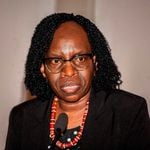
Auditor-General Nancy Gathungu flagged irregularities in CBK’s secretive award of the tender to the firm saying the CBK management failed to appoint a special committee to guide the search for the currency printer of fresh bank notes.
However, CBK governor Kamau Thugge defended the decision saying the procurement received the blessings of the National Security Council, which presides over all national security organs, and therefore had to proceed.
Regulations 84 of the Public Procurement and Asset Disposal Regulations (2020) says an accounting officer of a national security organ or procuring entity that deals with classified items shall appoint a special committee to handle the procurement and disposal of its classified items.