How US rivalry with Russia, China gifted exporters Agoa extension boost

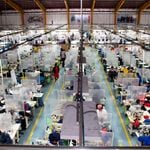
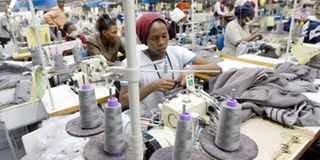
Workers at the Export Processing Zone in Athi River where companies operate under the tariff-free zone. US extends Agoa for three years, spurred by China and Russia’s influence in Africa, safeguarding Kenyan exporters.

Photo credit: File | Nation Media Group

Pressure from China and Russia prompted the US House of Representatives to pass a Bill to extend the Africa Growth and Opportunity Act (Agoa) programme, which provides preferential access to a key market for goods from Kenya and other select African nations, a top official has revealed.

The US House of Representatives voted on Monday to extend Agoa for three years, bringing relief to Kenyan exporters to the US who had been primed to be hit by tariffs of as much as 42 percent from October 1, 2025, and to thousands of jobs at firms operating in export processing zones (EPZs) that were at risk.
Mr Jason Smith, chairman of the House Committee on Ways and Means in the US House of Representatives, revealed that fears of inroads by China and Russia into Africa influenced the decision to extend the Agoa deal. The Bill on Agoa extension is now expected to go to Senate for approval.

“An extended lapse in Agoa would create a void that malign actors like China and Russia will seek to fill,” the official said.

Mr Smith said that Agoa is the cornerstone of economic relations between the US and sub-Saharan African nations and also safeguards America’s national security and foreign policy interests.

“Agoa has the most stringent eligibility criteria of any trade preference program; countries must meet strict standards related to the rule of law and political pluralism, anti-corruption, intellectual property rights, human rights, and market access. Further, the programme ensures beneficiaries do not undermine US national security or foreign policy interests,” he said.

Scramble for Africa

Russia and China have stuck out their necks in a scramble for economic, trade and security partnerships in Africa amid global realignments since the end of the Cold War.

More than three decades after the Cold War, the world order is undergoing a structural transformation. The new order is fraught with proxy fights as many nations challenge America’s hegemony.

China has, for example, stepped up its pursuit of diplomatic and commercial ties in Africa through initiatives such as the Maritime Silk Road, a key component of Beijing’s Belt and Road Initiative, a major development plan that aims to connect China with the rest of Asia, Africa and Europe.

Russia has also intensified diplomacy and development ties in Africa, where it has signed military-technical agreements with many countries and secured profitable mining and nuclear energy deals.

The forays by China and Russia have spooked the US, which has now opted to extend the Agoa pact as a further deterrent to its rivals.

“Africa is home to approximately 30 percent of the world’s critical mineral resources, and China has invested $8 to $10 billion in Africa to try to monopolise these essential supply chains,” Mr Smith said.

“The (Donald) Trump Administration has focused on stability in Africa, most recently evidenced by President Trump’s work to secure peace between Rwanda and the Democratic Republic of the Congo (DRC) and the Administration’s announcement of a Strategic Partnership Agreement with the DRC to develop critical minerals,” he added.

Agoa exports

The extension offers relief to Kenyan exporters who have relied on Agoa for more than two decades, building an industry that exported goods valued at Sh60.5 billion in 2024 alone.

Over the past five years, Kenyan companies exported 518.3 million pieces of textiles and apparel to the US under Agoa, with the number of companies operating under the framework increasing from 28 in 2020 to 40 in 2024.

Players, including manufacturers who have benefited from the programme and the government, have been lobbying for its extension since early last year, with delegations dispatched to the US in recent months.

Manufacturers said shipments to the US had been slapped with full duties ranging from 15 to 42 percent since the lapse of Agoa last September.

“Currently, manufacturers are paying a full duty range of 15 to 42 percent, plus a 10 percent reciprocal tariff. This is a high cost that would be waived through the negotiated agreement or Agoa extension,” Tobias Alando, the chief executive officer of the Kenya Association of Manufacturers (KAM), told Business Daily in an earlier interview.

The absence of Agoa and the consequent jump in tariffs on exports to the US would expose Kenyan exporters to fierce competition from lower-cost producers in Bangladesh and Vietnam, putting about 70,000 jobs at tax-friendly EPZs — particularly in Athi River and Thika — at risk.

Data from the Kenya National Bureau of Statistics shows that the 40 companies operating under Agoa employed 66,804 people in 2024, up 15.18 percent from 2023, and injected Sh38.27 billion in new capital investment. Export earnings under the programme rose 19.2 percent in 2024 to Sh60.57 billion, driven largely by garments and apparel.

The Agoa pact allows the entry of more than 6,000 products, such as food and beverages, wood, plastics and rubber, into the US market from sub-Saharan Africa. However, Kenya has largely tapped the apparel line, alongside small quantities of macadamia nuts.

The Kenya Private Sector Alliance indicated that the extension of Agoa provides an opportunity to grow apparel exports from nearly $600 million (about Sh77.40 billion) to $2 billion (Sh258 billion), potentially creating 200,000 new jobs through backward integration in textiles, yarn and cotton.

The American Chamber of Commerce in Kenya (AmCham Kenya) also flagged competitive pressures from China, which has granted zero-tariff access for 98 percent of African exports.

With 90 percent of fabric inputs for apparel sourced from Chinese suppliers, the business lobby added that retaining Agoa’s Third Country Fabric (TCF) provision — which allows manufacturers in eligible sub-Saharan African countries to utilise fabrics sourced from any country — is critical for Kenyan factories to remain competitive in the US market.

Kenya’s exports to the US jumped to a three-year high over the first eight months of 2025, signalling a scramble by traders to beat the scheduled September 30, 2025, expiry of the Agoa arrangement.

Kenya’s exports to the US hit Sh50.87 billion between January and August 2025, marking the highest value since 2022, when it shipped Sh52.25 billion worth of products over a similar period.

The January–August 2025 performance marked a third successive year of growth in Kenya’s exports to the US, data from the KNBS showed.

PAYE Tax Calculator

Note: The results are not exact but very close to the actual.