Memusi, the 700-household estate built to own, not rent

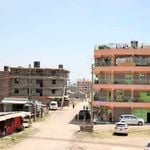
An estate at Memusi area in Ngong, Kajiado County pictured on February 26, 2026. Bonface Bogita | Nation

Photo credit: Bonface Bogita | Nation Media Group

A few kilometres past Ngong town, a narrow river marks a quiet boundary between Matasia and Memusi, a historically rich but understated neighbourhood in Kajiado County.

Memusi is not loud with high-rise blocks, nor does it advertise itself with gated estates. Its brick-roofed homes tell the story of some of the area’s earliest permanent settlers. Today, the community comprises nearly 700 households.
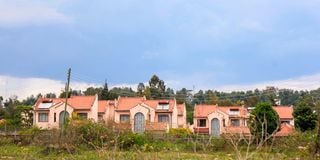
Because of its small, close-knit nature, rental yields here remain modest, at least by Nairobi standards.

A one-bedroom unit averages Sh10,000, while a two-bedroom unit fetches about Sh20,000, attractive for young families and people working in the capital city.

However, land prices here are quite premium with a quarter acre priced upwards of Sh6 million. Barely a decade ago, the same size of land was going for about Sh500,000.

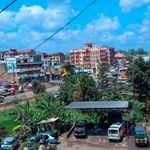
 Commercial buildings pictured at Memusi area in Ngong, Kajiado County, on February 26, 2026. Bonface Bogita

Photo credit: Bonface Bogita Nation Media Group

To understand Memusi’s property trajectory, one must first understand its roots. Long before plot numbers, title deeds and rental valuations, Memusi was a Maasai settlement zone.

Salaon Kashorda, a long-time resident, traces the area’s origins to the 1940s.

“I was born and raised here. We are Maasai, so this is our central home. Over the years, we have welcomed guests by selling land to them,” he says.

“My father moved here in the 1940s. He owned 70 acres. At that time, no one owned less than 50 acres.”

Mr Kashorda explains that Ngong’ too emerged as a settlement zone bringing together various Maasai clans.

Salaon Kashorda, a resident of Memusi area in Ngong, Kajiado County, pictured at his home on February 26, 2026.

Photo credit: Bonface Bogita | Nation Media Group

“You could not say it belonged to the Matapato, the Kankere or the Kaputiei because we were all here,” he says.

That inclusive model later made it easier for outsiders to acquire land, laying the foundation for today’s increasingly cosmopolitan ownership.

For decades, Memusi and its surrounding areas remained largely untouched.

“Until the late 1970s, this was still virgin land. I could see someone approaching from hundreds of metres away because the land was open,” recalls Mr Kashorda.

The turning point came in the 1980s, when infrastructure development, land adjudication and gradual urban pressure began reshaping the landscape.

At the time, land was modestly priced. An acre fetched between Sh30,000 and Sh40,000. Today, that acreage is nearly impossible to find.

“Currently, it is very difficult to get an acre. The land has been subdivided. The biggest available size is usually a quarter acre, which goes for around Sh6 million,” says Mr Kashorda.

Scarcity has intensified as more buyers build homes rather than hold land for speculation.

“Nobody wants to sell,” he adds.

Infrastructure has contributed greatly in driving land appreciation across the Ng’ong - Kiserian corridor. Rural electrification, improved water access and road upgrades triggered some of the earliest price jumps.

“In 1986, when electricity poles were installed, land prices doubled almost overnight. What was selling for Sh40,000 went to Sh80,000. We also had a borehole drilled in 1982. It was the only one around Ngong’ at the time,” recalls Mr Kashorda.

He believes that another reason for the skyrocketing land prices then was due to limited financial literacy that saw many native landowners lose huge tracts of land.

“When banks introduced loans, some people pledged vast land, even 1,000 acres, against loans of about Sh100,000. Looking back, it did not make financial sense. They didn’t have that financial literacy to assess their land as an asset with monetary value,” he says.

Loan defaults led to auctions, and the land was sold at high prices to recoup the loans.

Zoning regulations

Rogers Mugusu, chairman of the Ramesa Residents Association and a Memusi resident since the 1990s, notes that zoning regulations have reinforced the area’s character.

“Ideally, this area is for single family dwelling units, which make up about 80 percent of the housing. It is a residential area,” he says, referencing provisions in the Kajiado spatial plan that explain why commercial development along the main Ngong’ Kiserian road remains limited.

“You can count the number of commercial buildings or flats along the road,” he says.

 Ramesa Residents Association Chair Rogers Mogusu, a resident of Memusi area in Ngong, Kajiado County, pictured on February 26, 2026. 

Photo credit: Bonface Bogita | Nation Media Group

Another inhibitor, according to Mr Mugusu is traffic congestion along Ngong’ road, especially from Karen. For those commuting to Nairobi, hours lost on the road are a key consideration.

That said, road upgrades and feeder road improvements have boosted Memusi’s attractiveness.

“Tarmacking has played a big role. We have seen investors coming in, especially petrol stations. For a long time, there were only two between Ngong’ and Kiserian,” he says.

On land prices, Mr Mugusu echoes Mr Kashorda’s observations. “I bought my first quarter acre plot in 1995 for Sh550,000. Today, it would sell for about Sh7 million. A similar plot but nearer to the road would fetch up to Sh11 million.”

Besides proximity to the road, the type of soil also influences price of land, the area has both cotton and red soil.

“Cotton soil areas are usually cheaper than red soil,” notes Mr Mugusu.

The biggest businesses

As settlement intensifies, certain sectors have expanded rapidly. Construction related businesses, veterinary services and farm inputs are among the biggest beneficiaries.

Solomon Gicharu, a veterinary and resident for nearly two decades, moved to Memusi because of land availability.

“I bought my half acre for Sh4 million. I intended to farm, although I no longer practise it actively,” he says.

While large scale farming has declined due to land fragmentation, small livestock ventures, especially poultry, have grown.

Solomon Macharia pictured at his business premises in Ngong, Kajiado County, on February 26, 2026. 

Photo credit: Bonface Bogita | Nation Media Group

“The biggest business now is poultry. Many settlers want something manageable within smaller plots,” he says.

Poultry requires only a modest shed, making it practical for shrinking land parcels.

“It is harder to keep big herds of cows or goats,” he explains.

Construction related enterprises have also multiplied.

“The number of hardware stores has increased, and volumes have gone up because there is a lot of building activity going on in this area,” he says.

PAYE Tax Calculator

Note: The results are not exact but very close to the actual.