Six counties snub Sh1.3 billion equalisation fund for development

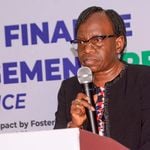
Nancy Gathungu

Auditor-General Nancy Gathungu.

Photo credit: Dennis Onsongo | Nation Media Group

Six counties with a combined allocation of Sh1.3billion under the Equalisation Fund failed to present project proposals for approval, an audit has revealed, denying residents better access to amenities such as clean water, roads, and healthcare.

The Equalisation Fund is a creation of Article 204(7) of the Constitution to help uplift regions of the country that have previously been secluded from the national cake. The Constitution demands that 0.5 percent of the national government's annual revenue be specifically allocated to marginalised areas.
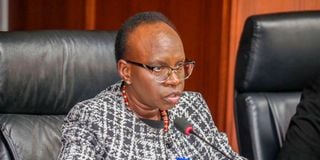
The Fund is meant to provide basic services, including water, roads, health facilities, and electricity, to marginalised areas.

A latest report by Auditor-General Nancy Gathungu for the fiscal year to June 30, 2025, shows that Bomet, Bungoma, Kericho, Kitui, Lamu, and Narok did not submit project proposals for financing under the Equalisation Fund despite a combined allocation of Sh1.3billion.

“A review of the performance indicated that six counties, namely Bomet, Bungoma, Kericho, Kitui, Lamu, and Narok, with a total appropriation of Sh1,365,639,170, had no approved projects as they had not presented project proposals for approval,” reads the report, but does not state why.

The counties are supposed to present their project proposals to the Equalisation Fund Board for approval and subsequent release of money to undertake them.

The projects must be related to water, roads, health facilities, and electricity, which the fund is supposed to address.

The fund is run by the Equalisation Fund Advisory Board established under the Public Finance Management (Equalisation Fund Administration), which guides the management of the fund, provides for the withdrawals, provides for completion of ongoing projects under the first policy, and provides for implementation of new projects.

Regulation 15 of the Public Finance Management (Equalisation Fund Administration) Regulations, 2021 provides that the County Technical Committee shall be responsible for approving all projects to be financed from the fund.

Submit work plans 

Further, Regulation 23 of the   Public Finance Management (Equalisation Fund Administration) Regulations, 2021 provides that the county executive member responsible for matters relating to finance shall submit work plans through the county technical committee to the board for approval.

Overall, Ms Gathungu says counties requisitioned only Sh2, 898,928,827 from the fund, representing 48 percent of the amount approved for projects in the devolved units.

“In view of the above, there was a delayed implementation of projects and the ultimate objective of the fund might not be achieved,” reads the report.

Under Article 204 (1) of the Constitution, the Equalisation Fund is entitled to 0.5 percent of all revenue collected by the National Government each year, calculated on the basis of the most recent audited revenue received and approved by the National Assembly.

The fund also draws its allocation from the unutilised cumulative amount of revenue from the previous financial year’s entitlement and allocation.

Article 204 (5) and section 18 (6) of the Public Finance Management Act, 2012, provide that unutilised or unspent balances of the fund do not lapse at the end of the financial year but are retained in the fund’s accounts for the purposes for which the fund was formed.

The first marginalisation policy was developed in 2013 and approved in December 2014. The policy was to be effective for three financial years from the date of its approval, which was the three financial years 2014/15, 2015/16, 2016/17.

The first policy identified 14 counties as marginalised, mainly in arid and semi-arid regions, and they have been benefiting from the fund. The counties include Kilifi, Kwale, Taita Taveta, Garissa, Mandera, Wajir, Tana River, Marsabit, Isiolo, Samburu, Narok, Turkana, West Pokot, and Lamu.

However, the Commission on Revenue Allocation revised the formula, expanding the number of beneficiary counties to 34.

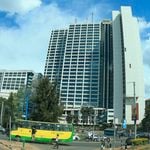
treasury

The National Treasury building in Nairobi, Kenya.

Photo credit: File | Nation Media Group

The 34 counties currently benefitting from the fund include Baringo, Bomet, Bungoma, Busia, Elgeyo Marakwet, Garissa, Homa Bay, Isiolo, Kajiado, Kericho, Kilifi, Kisumu, Kitui, Kwale, Laikipia, and Lamu.

Others include Machakos, Mandera, Marsabit, Meru, Migori, Murang’a, Nakuru, Nandi, Narok, Samburu, Siaya, Taita Taveta, Tana River, Tharaka Nithi, Trans Nzoia, Turkana, Wajir, and West Pokot.

The new model, which expanded the beneficiaries, identifies specific sub-locations and wards considered marginalised across these counties.

PAYE Tax Calculator

Note: The results are not exact but very close to the actual.