Time flies with great content! Renew in to keep enjoying all our premium content.
Prime
Kenne Belgrade: Lead transaction advisor for KPC IPO speaks on the IPO's highs and lows
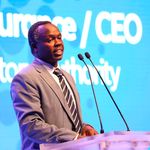
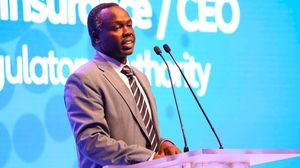
Kenne Belgrade, Team Leader at Faida Investment Bank. The lender is the lead transaction advisor for Kenya Pipeline Company (KPC) initial public offer (IPO).
The Business Daily spoke to Kenne Belgrade, the team leader at Faida Investment Bank-the lead transaction advisor for Kenya Pipeline Company (KPC) initial public offer (IPO) whose results were announced on Thursday.
The conversation touches on the highs from the oversubscription by local institutions and the government of Uganda, to the lows of apathy among foreign, local individual investors and oil marketing firms.
There is a clear bias in participation towards regional and local institutions, what’s your reading on this?
We went out looking for, you know, Sh106.3 billion. This issue was oversubscribed by over Sh5 billion. We got an application for almost 12.5 billion shares. When you put it in relative terms, that's significant. To put it into context, that could buy you 10 issues of the NSE at its 2014 initial offer.
People told us that there was investor apathy and that investors were not coming in. Today we're talking about 73,000 individual investors in the share register.
Yes, we targeted a higher number, but looking at where we came from, we are encouraged.
Oil marketing companies (OMCs) limited participation does not appear to support the view of Kenya Pipeline as a strategic investment, why is this the case?
I chaired the allocation committee for the IPO and held meetings with oil marketing companies at least four times. OMCs indicated they wanted to own a stake in KPC and even argued that the 15 percent share allocation was not enough.
The OMCs however developed cold feet including the existence of court cases that threatened to block the IPO and fear of the offer’s overvaluation.
Some of the OMCs required approvals from their home markets and this was delayed. There was also divergence on whether the dealers invest individually or as a group. At the end of the day, 10 smaller OMCs made limited investments in the offer as the majority decided to wait out for price discovery in secondary trading. We are hopeful and confident based on our engagement of the oil marketers of their participation in the secondary market.
What other positives do you take from the results of the offer?
We have seen our capital markets demonstrating depth. Safaricom raised about Sh50 billion, and we are here raising Sh106.3 billion. 99.8 percent of the subscriptions have come from Kenya and the region with a little share of foreign investors. Someone told me that we're using our own resources, whether it be human or financial drivers. The high participation by institutional investors is an endorsement to the offer.
There were queries over the company’s valuation, what’s your expectation when secondary trading begins next week?
Investors waiting for the share to fall to say Sh6 per share will have to wait for a long-time. Mark my words. That dream is gone. Institutional investors buy and hold shares for a long-time. Without a big pool of retail investors, we expect little volatility in the traded price. We expect stability and maybe even a rally in the share price.
When you find success against adversity, there is a temptation to lash out and ‘flex’. What’s your response to doubters?
The doubts began in 2009 with the Gazette Notice on the sale of Kenya Pipeline. No one believed that this team would make it happen. So even when the offer was announced, some people did not believe it and we saw a lot of doubters. From the very beginning, there were a lot of naysayers.
When we got into the transaction there were also a lot of conspiracy theories. Some suggested that some select individuals were angling to buy KPC and that they wanted to undervalue it and sell it among themselves.
When we came up with the valuation of Sh9 per share, the same people now said we had over-valued the offer. And before we knew it, it was said that we were now targeting foreigners.
People doubted when the offer was extended for three days. Why would we extend an issue for only three days if subscriptions were that low?
By the time we extended the offer, we were confident that subscriptions were above 80 percent, and we explained the reasons for the extension. Some material matters arose and we also needed to accommodate retail investors on the Ziidi Trader (M-Pesa shares trading).
What precedent does this IPO set for Kenyan capital markets?
We are encouraged by the uptake, especially the last-minute uptake by our retailers. For the future, we believe this is setting precedent to open the gate for more initial public offerings/IPOs to come.
As the first industrial REIT in East Africa, we are very encouraged by this outcome,” said ALP Chief Executive Raghav Gandhi.