Treasury flags risk of paying investors if toll highways suffer weak demand

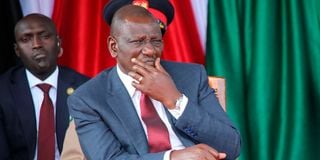
President William Ruto during the 89th National Youth Service (NYS) passing-out parade ceremony at the service's Paramilitary Academy in Gilgil, Nakuru County on August 28, 2025.

Photo credit: File | Nation Media Group

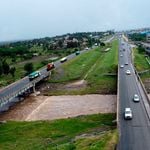
The National Treasury is wary of low traffic volume and revenue shortfalls on the Nairobi–Nakuru–Mau Summit and Nairobi–Maai Mahiu–Naivasha roads, risks that could force the government to compensate private investors who have built the infrastructure.

In its 2026 Budget Policy Statement (BPS), the Finance ministry says these are among the contingent liabilities of the Sh150 billion public-private partnership (PPP) that the William Ruto-led administration wants to unveil before the next elections. Contingent liabilities are potential financial obligations that depend on the outcome of an uncertain future event.
The Treasury also listed potential renegotiation risks as the other hidden risks that could crystallise in the future, once implementation of the toll roads has started.

The two roads are among the large-scale PPP projects under implementation in the current financial year ending June 2027, and which are expected to raise a total of Sh65 billion from private investors.

Some of the fiscal risks under the proposed toll roads include “traffic demand uncertainty, revenue shortfalls and potential renegotiation risks,” said the Treasury in the BPS, tabled in the National Assembly last Thursday.

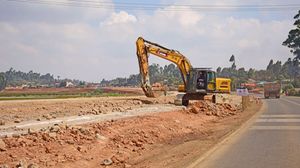
President Ruto’s administration aims to upgrade the 175-kilometre stretch from Rironi to Mau Summit, as well as the Rironi–Maai Mahiu–Naivasha (A8 South) and Naivasha–Gilgil sections, under a PPP arrangement.

Under this 30-year concession, private investors will charge motorists toll fees to recover their estimated Sh184 billion to Sh200 billion investment. The private investors that have so far been tapped include a consortium involving China Road and Bridge Corporation (CRBC), the National Social Security Fund (NSSF), and Shandong Hi-Speed.

However, the Treasury says that the project, like the 35 other PPP projects, exposes the government to significant fiscal risks.

“These projects also face cross-cutting risks related to inflation and exchange rate volatility, which may crystallise into government obligations where risk allocation is not effectively enforced,” said the Treasury.

In its privately initiated proposal (PIP), the CRBC–NSSF consortium carried out a survey to establish traffic volumes on the Nairobi–Malaba section and the separate 58-kilometre Rironi-Maai Mahiu-Naivasha section that is known as A8 South, between October 22 and October 28, 2024.

The results showed that traffic is projected to nearly double between 2028 and 2055.

An estimated 40,000 vehicles use the Rironi-Mau Summit road daily and are expected to become paying customers once tolling starts.

However, there are fears that motorists might opt to use other roads, thus denying the road enough revenue to make the project profitable.

The consortium has proposed to have the government fully absorb risks related to planning and design, construction, political, and municipal utility relocation. Other risks to be taken up by the government include those related to land acquisition and the social risk of charging toll fees.

Both the government and the consortium would share the risks of traffic management during construction, completion risk, project bankability, environmental approval and permit, exchange rate risks, and tax risks.

The private investor would also absorb risks associated with the control and management of environmental issues, interest rate, operational and management risks, and fee-based business risk.

While the Kenya National Highways Authority (Kenha) had initially given the contract to the CRBC-NSSF consortium, the government brought back the losing bidder, Shandong Hi-Speed Road and Bridge International Engineering (SDRBI) of China, to avoid scrutiny and lengthy approval from the Chinese government due to the large size of the contract.

SDRBI will now construct the 94-kilometre Gilgil-Mau Summit section of the highway, which also includes a viaduct through Nakuru City.
Beijing usually demands approval for overseas projects exceeding $1 billion (Sh129 billion) that are handled by State-owned Chinese firms.

Follow our WhatsApp channelfor the latest business and markets updates.

PAYE Tax Calculator

Note: The results are not exact but very close to the actual.