How fitness apps are transforming running in Kenya

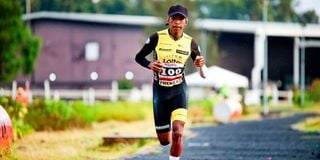
Lewis Pheneas Kinyua, national duathlon champion and African Duathlon Cup silver medallist, tracks heart rate and pace with Strava and Garmin for competitive edge.

Photo credit: Pool

For many runners today, the workout does not end when the shoes come off. It continues on screens, watches syncing with phones, apps uploading routes and communities reacting in real time. Fitness technology has woven itself into running culture, shaping how athletes train, measure progress and connect.

For Christine Khanili, a restorative dental surgeon and aspiring Comrades ultramarathon finisher, digital tracking evolved with her ambitions. When she moved from short races to endurance events, she switched from an Apple Watch to Garmin for its stronger battery life.
“I needed something that could last longer,” she says. Her watch automatically shares workouts to Strava, which she considers the social layer of her training. “Garmin tracks everything, but Strava is social. If it’s not on Strava, it didn’t happen,” she laughs.

Although she ran in school and university, Christine only resumed serious training in 2022. Monitoring heart rate, pace and elevation transformed her approach. Seeing heart rate drop while pace improves signals progress. “The numbers show you you’re getting fitter.”

Sharing that data also led her to a coach. “That’s how I got my running coach. He could analyse what I’d already recorded.”
Still, she draws boundaries.

“You can have the instrument, but your body knows how it feels,” she says. She does not let apps dictate sleep or diet, relying instead on intuition.

Where she sees the strongest influence is community. Social platforms expose runners to peers, aspirational athletes and beginners alike. Group challenges and themed runs circulate online, nudging participation.

“It’s fun — Valentine’s runs, Christmas runs — you see someone doing it and want to join,” she says. Yet she admits the competitive element can overshadow enjoyment. “For some people it stops being a hobby and starts feeling like a career.”

Practically, she prefers a smartwatch over carrying a phone. Beyond convenience, real-time heart-rate alerts offer reassurance during long efforts. Tracking elevation and pace during an ultra event in Naivasha strengthened her confidence in longer distances.

Technology is not flawless. GPS discrepancies, jokingly called “Strava tax”, can frustrate runners when recorded distances fall short. Even so, she believes visibility has grown the sport. Her advice to beginners is simple: “Just run first. Later you can get the gadgets.”

Christine Khanili, a restorative dental surgeon and aspiring Comrades ultramarathon finisher uses Garmin and Strava to track long runs and connect with the running community.

Photo credit: Pool

Performance refinement

For professional athlete Lewis Pheneas Kinyua, data is less about social sharing and more about performance refinement. The national duathlon champion and African Duathlon Cup silver medallist structures training around measurable feedback.

“The most common app I use is Strava,” he says. “It’s good for checking progress.” He pairs it with Garmin Connect for deeper breakdowns.

When running shifted from hobby to profession, recording sessions became essential.

“I needed to compare progress across workouts.”

Heart rate is his primary indicator. “You compare pace with heart rate to ensure you’re in the right zone.” Staying within those zones builds endurance and race readiness.

Apps also introduce a psychological edge. “Sometimes you’re chasing a course record, sometimes your own record — they motivate you.” Pressure exists, he admits, but in moderation it drives improvement.

Tracking has shaped his broader habits too. Reviewing weekly data helps him adjust training loads, sleep and recovery. Leaderboards and shared runs create virtual competition. “Me and my friends are often fighting for a course record somewhere. That competitive level is a good thing.”

He prefers a smartwatch over a phone for efficiency. During last year’s Nairobi City Marathon half-marathon, pacing alerts prevented early burnout and contributed to a personal best. Still, forgotten charging or GPS glitches remain common frustrations.

Kinyua believes fitness tech has reshaped running culture. Conversations about metrics are now routine. Yet he cautions beginners against early obsession. “When you’re starting, just run. Once you’re consistent, then start checking the stats.”

If improvement is needed, he says, it lies in accuracy and clarity. “At the end of the day, it’s about data you can trust.”

Guiding tool

Supeet Sambayon’s path into distance running began in the boxing ring. Now a marathoner, he approaches training with structured discipline, relying on the Coros ecosystem for precision.

“Accuracy matters; distance, location, heart rate,” he says. He owns a limited-edition Eliud Kipchoge Coros watch, praising its GPS precision and lightweight design. “It’s precise and beautiful. I wear it daily.”

He only began tracking seriously when his running became structured. Interval sessions and pacing targets required measurable feedback. Heart rate remains his first post-run check, the clearest signal of how his body responded.

Unlike some runners, he feels little pressure from metrics. “For me it’s a guide tool. It helps during a training block.” The watch has influenced recovery awareness more than diet. “It shows when I’m fatigued and when I’ve recovered.”

Community also matters. Sharing progress makes running feel less solitary. Still, he occasionally leaves the watch behind for relaxed evening runs. “Sometimes I just enjoy the view.”

His advice to beginners is gradual: build comfort with movement before focusing on advanced features. If he could improve one thing about apps, it would be clearer, more personalised insights.

Staying in the present

For Fredrick Ng’eno, a financial auditor, running began casually barely a year ago. Within months he was placing on podiums, including a strong showing at the Barbados Marathon in 2025 and a win at Hyrox254. Tracking, he says, accelerated that progression.

“I train with a Garmin watch that syncs with Strava,” he explains. “The watch helps me improve; the app keeps it engaging.”

Fredrick Ng’eno, financial auditor turned competitive runner, combines Garmin and Strava to monitor performance and stay motivated on every run. 

Photo credit: Pool

Unlike many runners, he logged sessions from day one. Initially, it was curiosity. Watching numbers improve month after month strengthened consistency. “Once you see progress clearly, you take the work more seriously.”

Easy runs are about controlling heart rate zones; faster sessions focus on pace, cadence and elevation. Yet discipline, he insists, matters more than any device. “The data reflects the work.”

As mileage increased, recovery and routine gained importance. The social layer added connection to what can otherwise be a solitary sport.

He values the practicality of a watch, lightweight, accurate and unobtrusive. Memorable runs often involve mid-session glances that confirm pacing. “It keeps me present without overcomplicating things.”

Accessibility, however, remains a challenge. Advanced features often sit behind subscriptions, and quality GPS watches are expensive. Still, he believes the impact has been largely positive. “Running has become both physical and digital. It’s made improvement visible.”

He rarely runs without logging, borrowing a phrase from his auditing background: “If it wasn’t documented, it didn’t happen.”
Yet his philosophy stays grounded. “Progress comes from showing up, especially on hard days. Small efforts add up.”

PAYE Tax Calculator

Note: The results are not exact but very close to the actual.